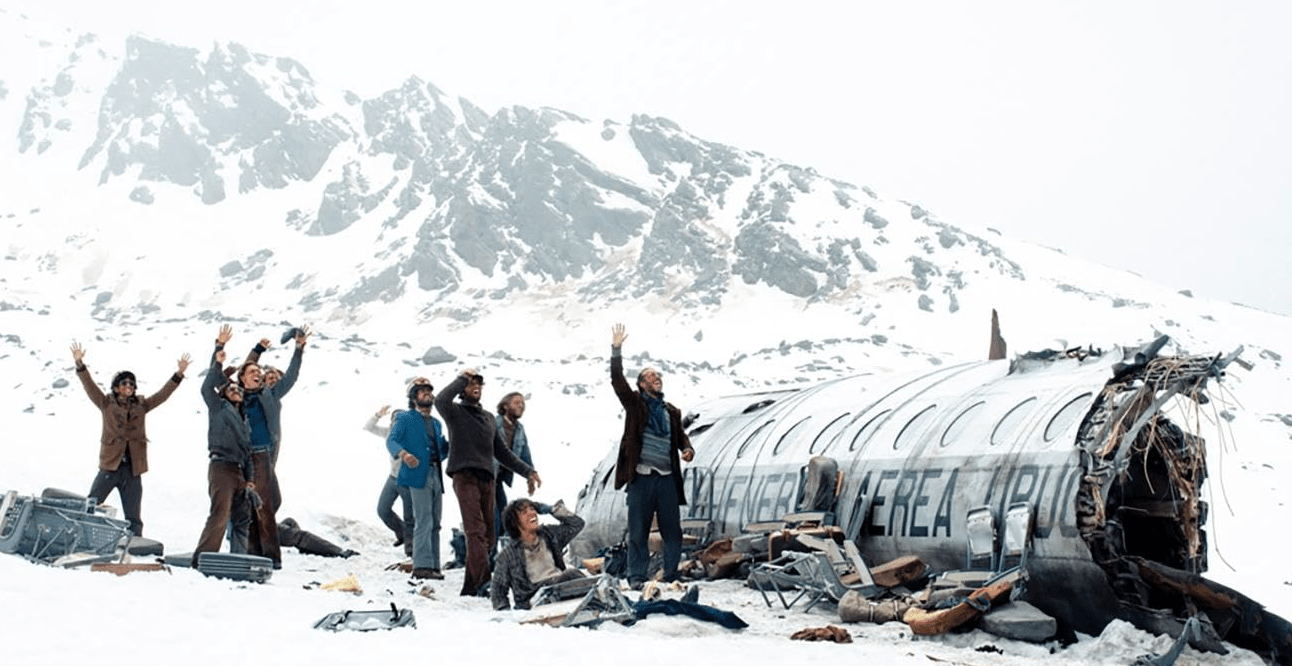
Está em cartaz no NETFLIX, o filme A SOCIEDADE DA NEVE, que o cineasta espanhol J.A.Bayona dirigiu e que vem merecendo prêmios internacionais e inclusive a indicação da Espanha para o Oscar de Melhor Filme em Língua estrangeira.
A queda do avião uruguaio, em 12 de outubro de 1972, que levava os jovens de um time de rúgbi, na Cordilheira dos Andes gerou pelo menos três filmes, dezenas de documentários e livros.
Os sobreviventes ficaram 70 dias perdidos e somente sobreviveram porque se alimentaram da carne dos corpos das vítimas.
Confesso que pelo mal estar que me causaram os filmes anteriores (OS SOBREVIVENTES DOS ANDES e ALIVE) e , estava decidido a não ver a versão de Bayona, apesar dos elogios.
Uma recomendação da Ana Cássia, minha esposa, me levou a mudar de ideia.
Vi disparadamente a melhor versão da história até hoje.
A receita de Bayona foi deixar o assunto do canibalismo como mais um aspecto da tragédia (nunca o principal) e focar que a sobrevivência milagrosa dos 16 rapazes (dos 45 passageiros e 5 tripulantes) somente se deu pela extrema colaboração entre eles.
Como sobreviver na montanha gelada e sem comida? Pelo filme, somente uma parceria incrível de todos naquela situação extrema viabilizou o fato.
A cena real em que um campesino chileno ouve a voz desgastada do sobrevivente Parrado que lhe jogou um bilhete manuscrito (molhado) dizendo que eram dois dos jovens acidentados 70 dias atrás.
O episódio trágico ficou eternizado, infelizmente pelo viés sensacionalista.
O filme de Bayona resgata que deve ser lembrado pela resiliência do espírito humano quando sobreviver a qualquer custo é a única possibilidade.
Trata-se de um belo filme que merece todos os elogios.
The film SOCIETY OF THE SNOW (LA SOCIEDAD DE LA NIEVE) is showing on NETFLIX. Spanish filmmaker J.A. Bayona directed and the picture has received international awards and even Spain’s nomination for the Oscar for Best Film in a Foreign Language.
The crash of the Uruguayan plane, on October 12th, 1972, carrying young people from a rugby team, in the Andes generated at least three films, dozens of documentaries and books.
The survivors were lost for 70 days and only survived because they fed on the flesh of the victims’ bodies.
I confess that due to the discomfort caused to me by the previous films (SURVIVE and ALIVE) and , I was determined not to see Bayona’s version, despite the praise.
A recommendation from Ana Cássia, my wife, led me to change my mind.
I saw the best version of the story to date.
Bayona’s recipe was to leave the issue of cannibalism as just another aspect of the tragedy (never the main one) and focus on the fact that the miraculous survival of the 16 boys (of the 45 passengers and 5 crew members) was only due to the extreme collaboration between them.
How to survive in the cold mountain without food? According to the film, only an incredible partnership between everyone in that extreme situation made it possible.
The real scene in which a Chilean peasant hears the worn voice of the survivor Parrado who threw him a handwritten note (wet) saying that they were two of the young people who were injured 70 days ago.
The tragic episode was immortalized, unfortunately due to the sensationalist bias.
Bayona’s film rescues what should be remembered for the resilience of the human spirit when surviving at any cost is the only possibility.
This is a beautiful film that deserves all the praise.

 Cinemarcoblog